Showing posts with label history. Show all posts

Monday, February 11, 2008

lincoln...devo

We haven't visited Lincoln: The Constitution and the Civil War at MOHAI, but Brad's thinking of taking the kids to living history day this Saturday. And we've all been learning a bit more about the war between the states. Aslin's learned to pronounce "Ulysses" and Ukiah finds it ironic that it was the northern republicans who advocated emancipation. We've been reading about the underlying labor and class struggles, the proposal that Union draftees could opt out of service for a $300 fee, and the power of individual states.

Our day would have continued with readings of the Gettysburg Address, but the Devo dvd couldn't be renewed. And I just paid $34 to clear our library fines. So, we turned our attention to August 17, 1980, the Phoenix Theatre in Petaluma, CA for lessons in the genius that is DEVO. The republicans were an entirely different breed by then- frightening, angering and motivating art-school kids across the nation.

I sing just a little too loud and we pause Jocko Homo for philosophical discussion on the evolution/de-evolution of society, government, industry and culture.
And today, I love homeschooling.


Freedom of Choice

by Devo
A victim of collision on the open sea
Nobody ever said that life was free
Sank, swam, go down with the ship
But use your freedom of choice

Ill say it again in the land of the free
Use your freedom of choice
Your freedom of choice

In ancient rome there was a poem
About a dog who found two bones
He picked at one
He licked the other
He went in circles
He dropped dead

Freedom of choice
Is what you got
Freedom of choice!

Then if you got it you dont want it
Seems to be the rule of thumb
Dont be tricked by what you see
You got two ways to go

Ill say it again in the land of the free
Use your freedom of choice
Freedom of choice...

Freedom of choice
Is what you got
Freedom from choice
Is what you want

Tuesday, October 02, 2007

been there, done that, would do it all again

This incomplete list of trip favorites use to live in the side bar. She graciously moved to a post knowing that no matter how painful, it's time for the Owlhouse to move forward.

Cape Disappointment- Long Beach Peninsula, WA

Saturday Market- Eugene, OR

Crater Lake, Oregon

Barack Obama, 2008

Cowboy Poets- Elko, NV

Gilgal Sculpture Garden- SLC, Utah

Lazy Lizard- Moab, Utah

Mesa Verde, Colorado

Carver Brewing- Durango, CO

Taos Pueblo, NM

Georgia O'Keeffe Museum- Santa Fe, NM

White Sands, NM

Chiricahua Mts, AZ

Bisbee- Bisbee, AZ

Desert Museum - Tucson, AZ

Sonora Co-housing - Tucson, AZ

Sam's Family Spa -Desert Hot Springs, CA

Ghetty Museum - Los Angles, CA

Camp Ocean Pines - Cambria, CA

Pipestone Vineyards - Paso Robles, CA

Sacramento Valley School - Sacramento, CA

Guemes Island - Washington

Lake Okanagan - Kelowna, British Columbia

Lake Louise - Banff, British Columbia

Kaslo- Kaslo, British Columbia

Kamloops Farmer's Market - Kamloops, British Columbia

Touchstone Farm - Mayerthorpe, Alberta

Gaetz Lake Sanctuary- Red Deer, Alberta

Local Currancy - Calgary, Alberta

Tyrrell Dinosaur Museum - Drumheller (Badlands), Alberta

Glacier National Park - Montana

Coeur d'Alene Library - Idaho

Grand Coulee Dam -Coulee, WA

Wednesday, August 15, 2007

on the cape


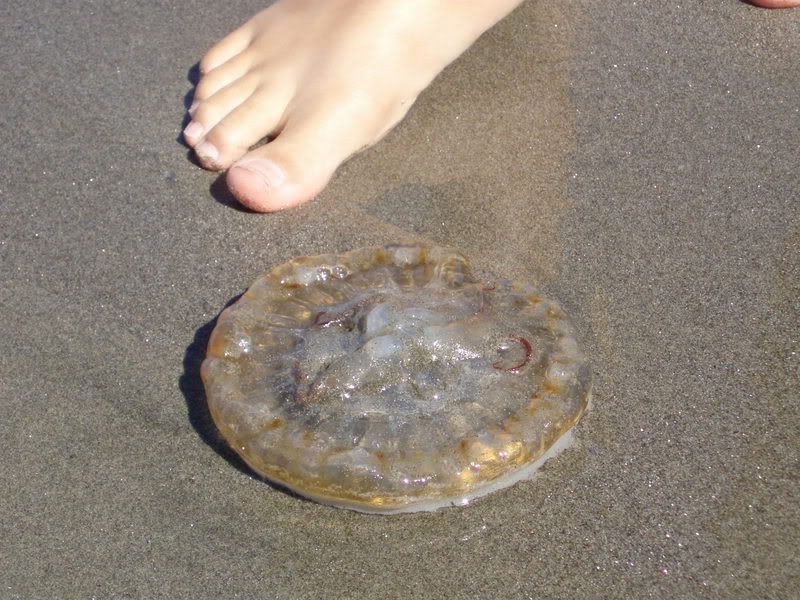
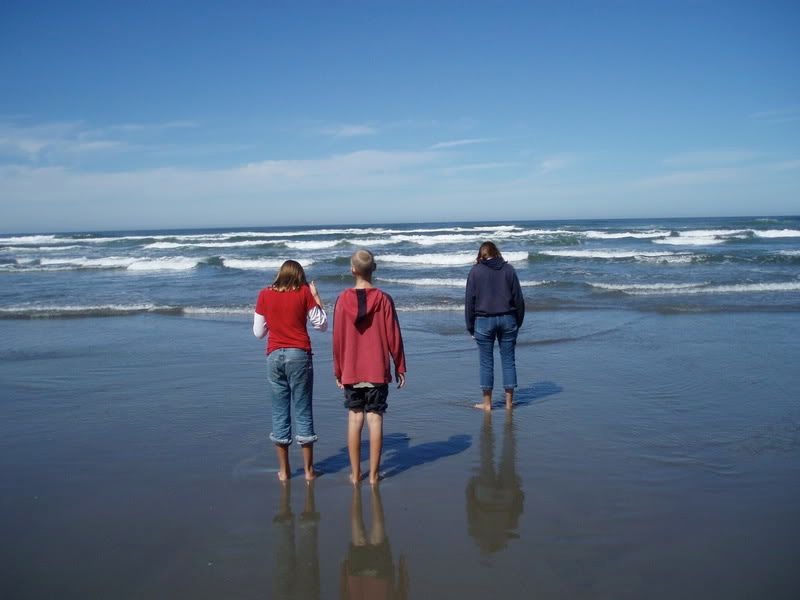
Brad tells stories of childhood trips to the beach, tales of rain and wet dogs. Sometimes misery. Usually redemption. "If you tough out the crappy days, the heavy mist and rains, you always get the fantastic day. Clear sky, gorgeous sun. Usually." Lucky us, camping space and a dry day all in one. Aside from the wind carrying sand shards across our feet, occasionally into our eyes, Cape Disappointment couldn't have been more perfect.

Lewis, Clark and company's experience was a bit different. After 18 months navigating westward along rivers, through the wild, they hit the Pacific in November, 1805. After being trapped by a 6-day storm in Dismal Nitch, the party continued an unsuccessful attempt to find an appropriate site for winter camp. Eventually, an unprecedented vote of all party members led the captains back across the Columbia to a "most eligable" spot along the Netul River.

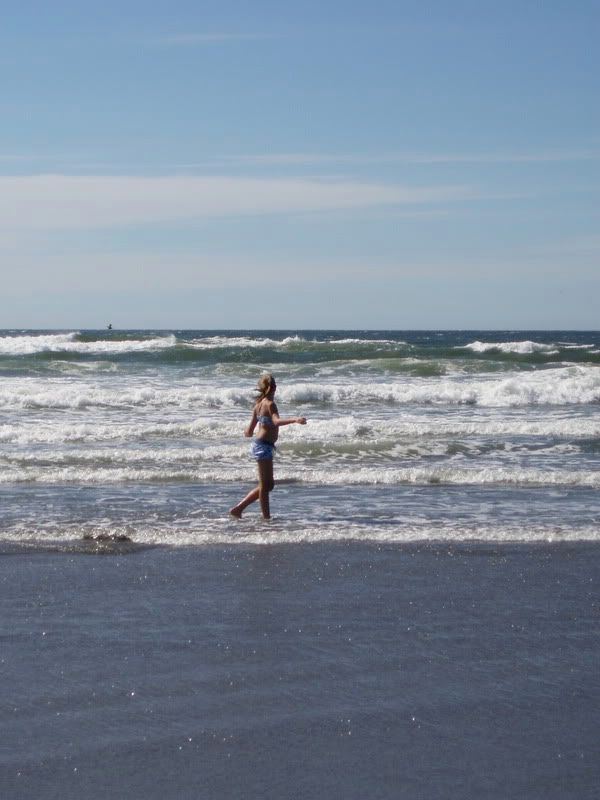
From the beach, the call of ships transitioning from the Columbia to the sea cuts across the surf, distracting Aslin from her wave hoping only momentarily.

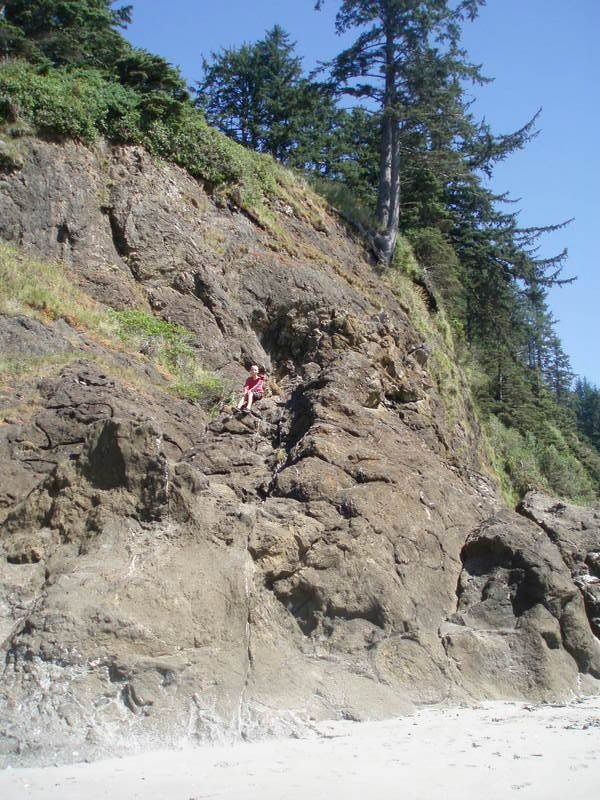
Barnacles hang onto the bottom few feet of the rock walls. Inland a couple hundred feet, Sitka spruce have taken root in the seastack has-beens, moss masking any trace of barnacle colonies. We recommend shoes for climbing either.

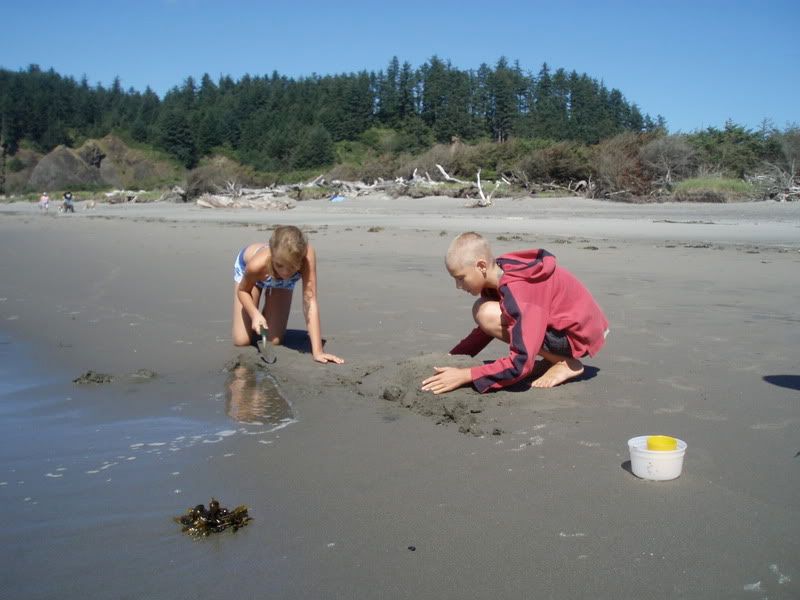
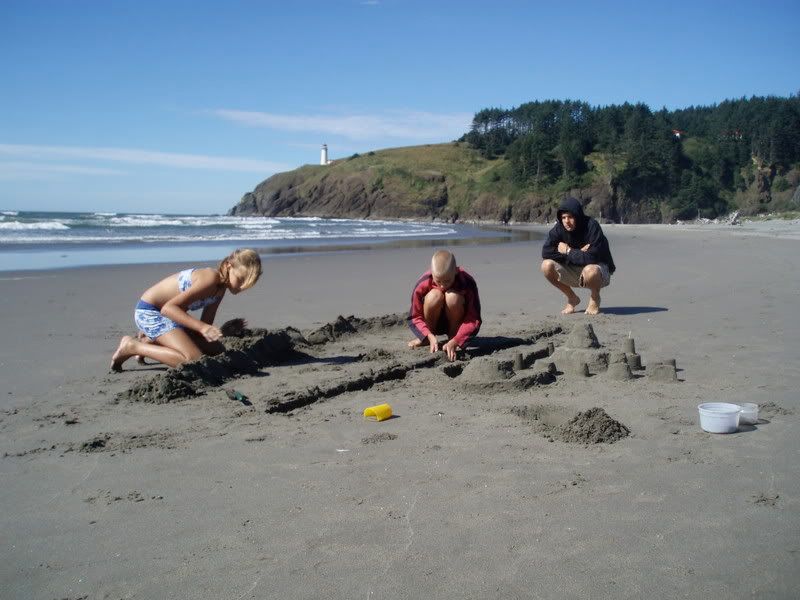
Without a guide, you could watch the waves for an hour, and still be unsure the movement of the tide. The best castle sand is found mid range, where the natural water content allows a solid base, and keeps the towers from crumbling before their time.
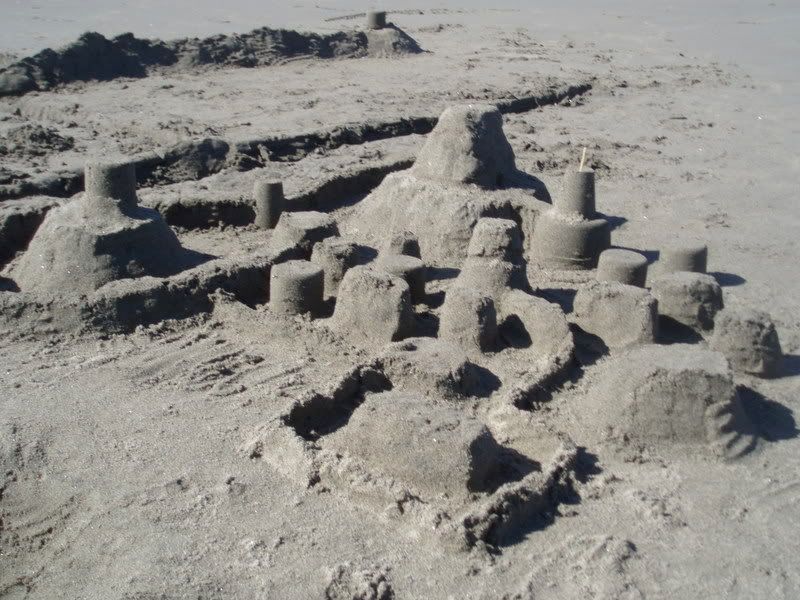
The beach gods are with us, sending only stray waves to challenge the moat's structural integrity, carrying the bulk of the threat out to sea.
They've been through it all before, the grains. We suspect they lived to the fullest before the eventual crash and crush.

Tomorrow, we'll find our own dear Owlhouse still standing.

Saturday, August 04, 2007

reasons to yodel

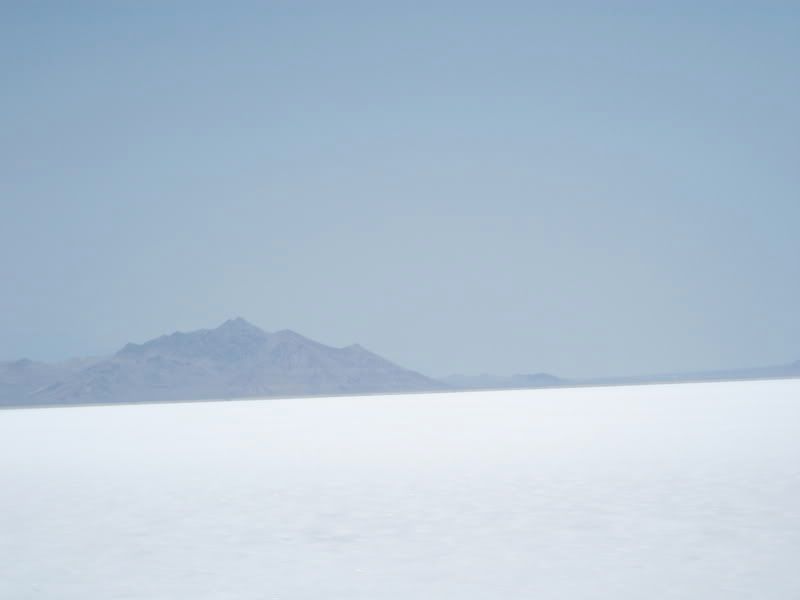
Sparkly. Glittering. Shadowed by low-cast clouds. The same clouds that convinced us to head west, skipping Antelope Island. Past the Morton Salt plant, the Bonneville Salt Flats show signs of aging. Cracks deep into the upper crust. Brad read of the concerns of decreasing salt levels. Not worry for the fly or pufferfish habitat, but fear the racing will suffer.

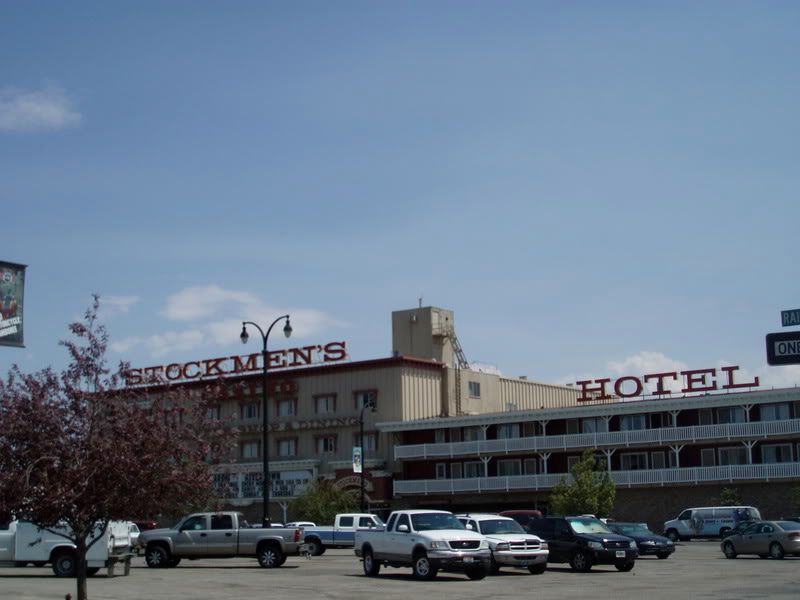
Before the visitor center, Nevada welcomes travelers with a pair of conjoined casinos. We took the highway under the skybridge and were advised that there were no accommodations in the area. Heart concert and some sort of centennial celebration have Wendover booked solid. Both sides.

If we'd known Elko was home to the Cowboy Poetry Gathering we might have headed here intentionally. Following last night's $10 gambling loss a hash-browns/four-cups-of-coffee breakfast in the casino coffee shop set us right for the day. We toured the library and laundromat. No slots machines at the former, a Maytag free corner dedicated to the sport in the latter.


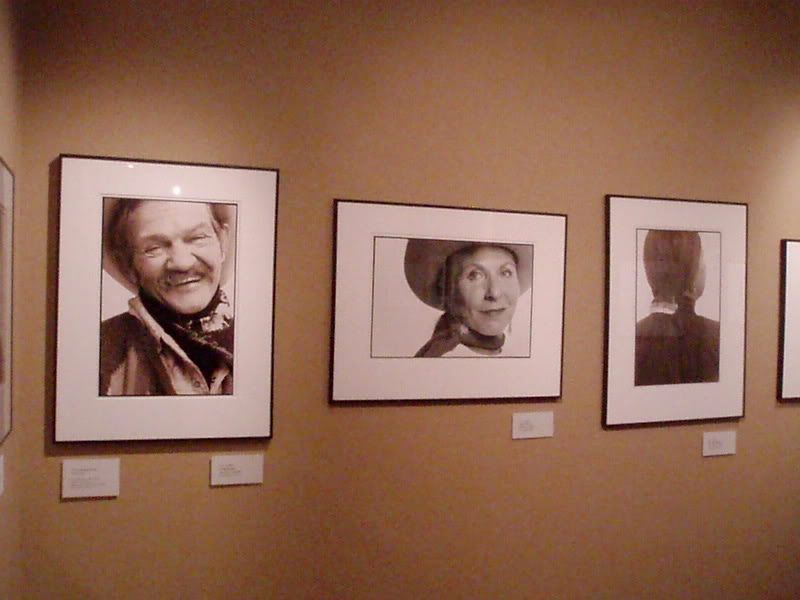
Behind a web of orange safety netting announcing the sidewalk closure, The Western Folklife Center pulled us in for LL Griffen's Something a Cowboy Knows. A series of portraits that invite faith in ranching life. Capturing the crows-feet of modern cowboys, she leads us to the past. Mad Jack Hanks and the others hold the history of the Bosque, Irish, Paiute and Mexican vaqueros. And the anglicized buckaroos they became.


We dedicated the afternoon to soaking in details of riding skirts and educating ourselves on the advantages of hemp reatas. (They doesn't stretch or rot.) An explanation accompanies a turn of the century photo I'd have taken for a water wheel. Beef wheels, a pre-refrigeration solution to keeping meat fresh for the ranch kitchen. Whole cows were prepared, wrapped in heavy cloth, wet, and raised high above ground. A leverage system allowing cooks, often Chinese, to lower the animal, cutting away the day's dinner supply. Who knew?

A video presentation, Why the Cowboy Sings, opens with cattle calls. Long and short notes, grunts. Calls across the octaves, direct the herds through the seasons. There's a rhythm, a rhyme to the commands, a distinct voice from everyone who "cowboys for a living." The narrator tells us city folks, "You can trust a horse more than a human... A horse will teach you preservation..."

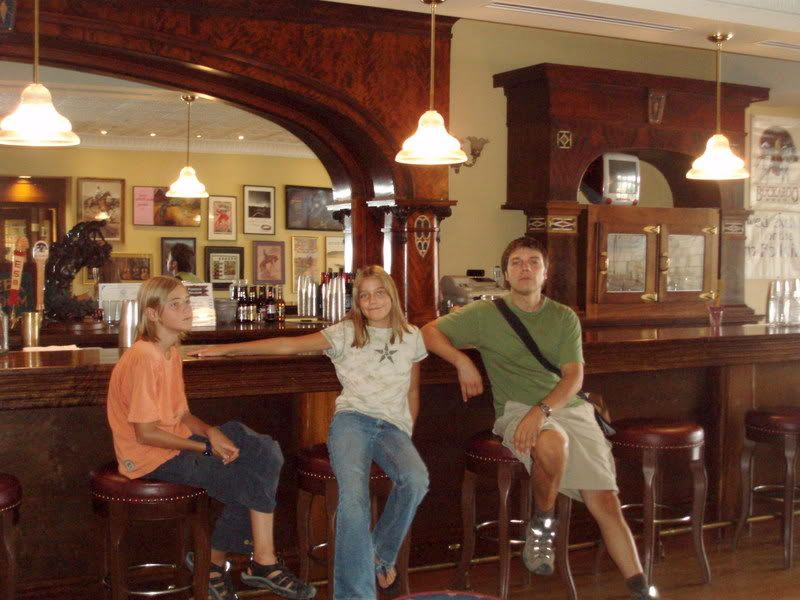
We'd like to order beers and sasperilla, think it over. But the Pioneer Bar is closed. Except in for a week in January when the folklorists, singers, artists, poets, the cowboys, keep it open. 24 hours a day.

Tuesday, June 26, 2007

hovenweep +

Cortez is more than the sad story we shared earlier. There's a charming Saturday morning farmers market, great coffee at the Spruce Tree House and easy access to rivers and rocks, some of our favorite natural wonders. Thanks to Micheal, Rani and Griffen for sharing their home and great travel tips.


Back roads out of Cortez took us through farm and range land, where a couple of renegade/entrepreneurs have planted vineyards. In her kitchen/tasting room, we chatted with Ruth Guy. Water rights, the neighbor's habit of dumping his tractor oil and the "kiss of death" that comes with labeling your wine organic and their hope to grow sustainably with out being marginalized. We recommend the Riesling and Cabernet Franc.


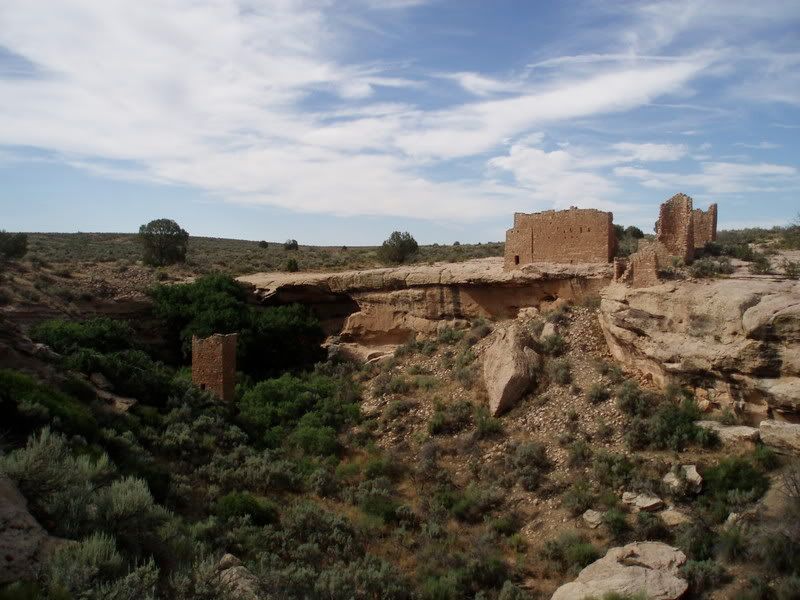
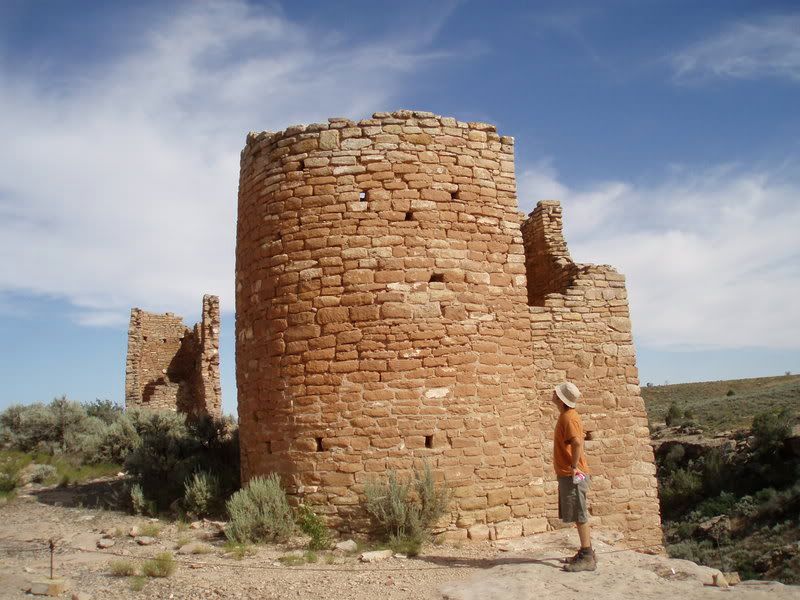
Of the ruin sites in the four-corners area, Hovenweep remains the only excavated site. At Little Ruin Canyon, we camped with the host, rangers, ravens and lizards. The 11 sites still standing in and around the canyon feel like a neighborhood. Everywhere you turn, another 700 year old building. Square tower sits alone on the canyon floor, as if directing the the seep and run off waters. Above, the sage and juniper grow from patches of dark earth, the only mesa top soil I've seen that actually looks farm-able. The larger Hovenweep site extended for miles, with clusters of D-shaped, oval and right-angled structures. Best estimates show the community thriving for 20 years before traveling south.


"It's kind of an unappealing name for a town. Don't you think?" Checking the map a few days earlier, Ukiah commented on Blanding, Utah. I defended it too soon. From our tour of the highway and a few side streets, it seems to be an aging mobile home community with more recent cookie-cutter with brick facade garage in-fill. To be fair, we only passed through the town. Appreciated the outdoor sculpture garden, but didn't even pay the $6/family fee to look inside Edge of the Cedars State Park/Museum.


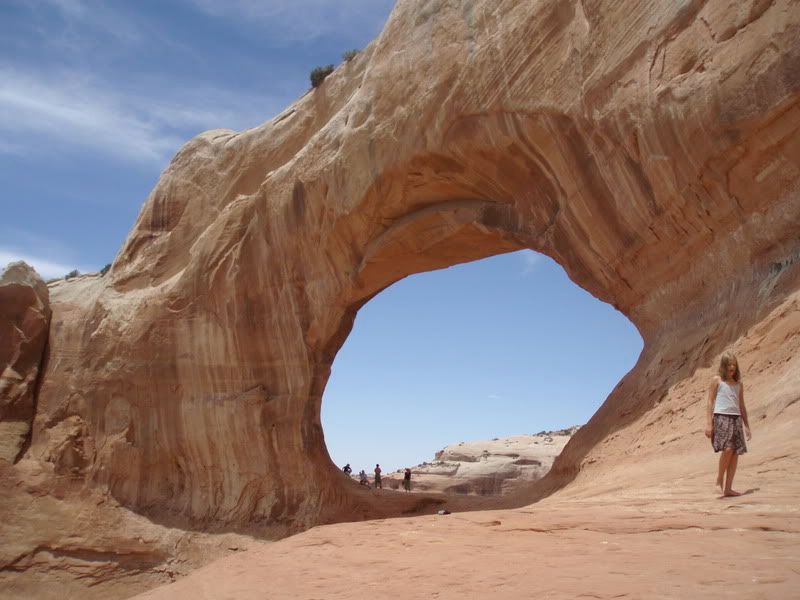
We didn't stop for Hole in the Rock and its road-side attraction "zoo"- but the sheer size of Wilson Arch had us pulling over along side tourists from at least six states. Past the mountain of trash at the edge of the pull-out, red rock aims for the sky. Along side a German family, we climbed, crawled and scooted our way the the hollow. Ukiah swore the view from the other side was not to be missed. With bare feet on hot rock, I passed him the camera.


FYI- Thinking of relocating? Please don't consider the new subdivision seizing this immediate area. Sure, from your traditional stucco southwest style or modern-rustic log cabin you'd have a geologic wonder for a back yard, but...

Saturday, June 23, 2007

versions of history

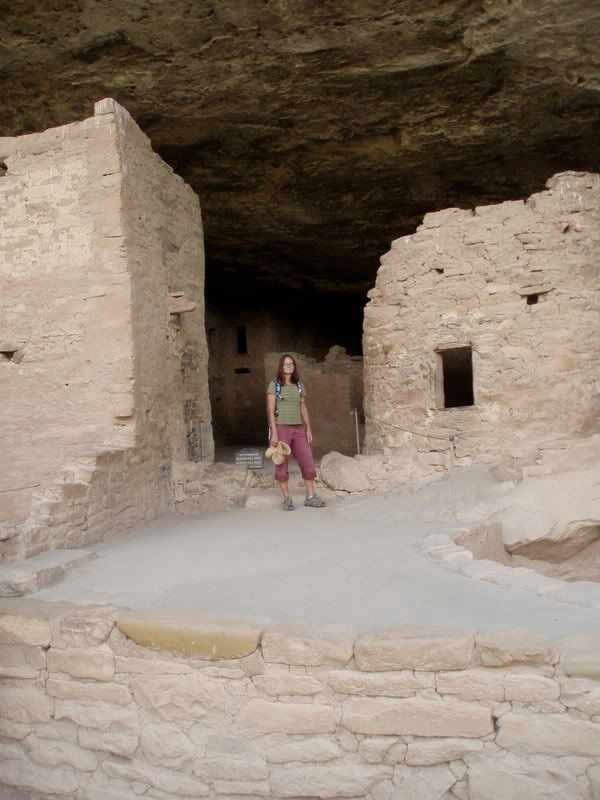
The Hohokum, Mogollon, and Anasazi. Before our time in the southwest, we weren't familiar with these ancestral people. Traveling through Arizona, New Mexico and Colorado, we've collected the stories told by art books, park rangers, catholic priests, native elders, anthropologists, historians and hippies. It's an incomplete education. Some claim the disappearance of the ancients. That drought or depleted resources or war lead to their demise. That by about 1300, the basketmakers and potters and farmers and hunters who migrated through and eventually settled the area, vanished.


Wait. Not true. They moved south, away from agriculture in a return to hunting and gathering. There were no Anasazi anyway. That's a Navajo word- something akin to "others" or "enemy". Why should people who showed up just before the Spanish name the Puebloan ancestors? Puebloan? Those are Hopi and Zuni ancestors, not just Puebloan.


The cliff dwellers are some of "the most peaceful people ever to walk the earth." But there is some evidence of cannibalism. And, for the record, they're "alcove communities" not cliff dwellings.

The carvings along Petroglyph Trail are interpreted as a linear story, the histories of the people who made them is anything but.


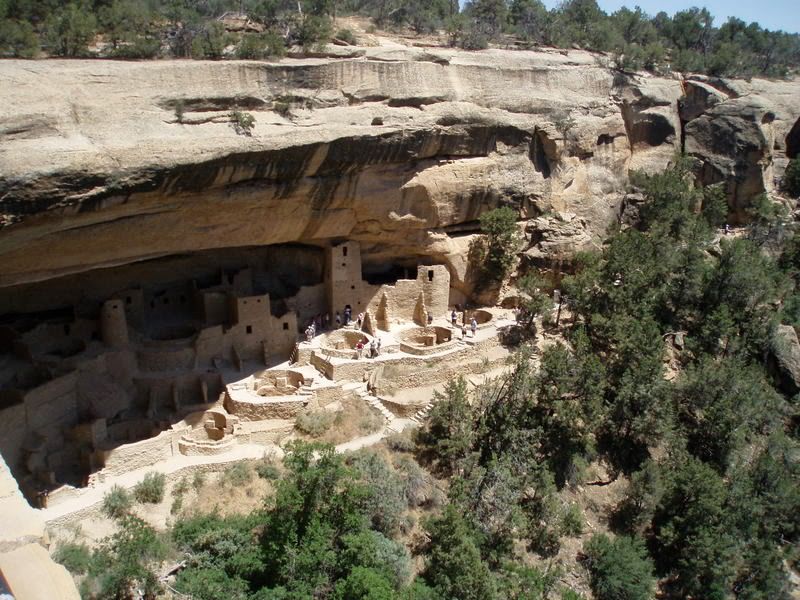
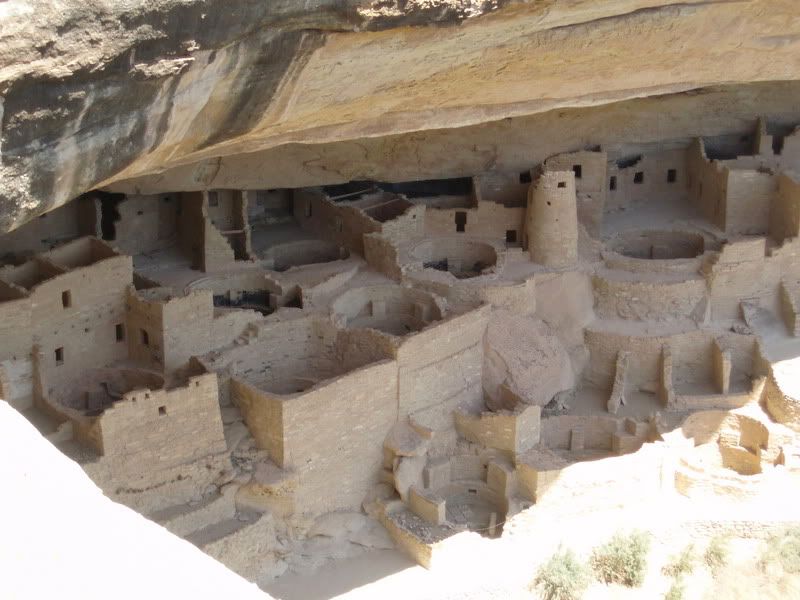
For now, the certainties tell us that approximately 800 years ago, some 50,000 people lived in the greater 4-Corners area. Climate, threat, advancing architectural skills, the Creator- something- led them to take residence in the alcove beneath the mesas.


Some lived in single family units while others lived in communities with streets and 100+ rooms.


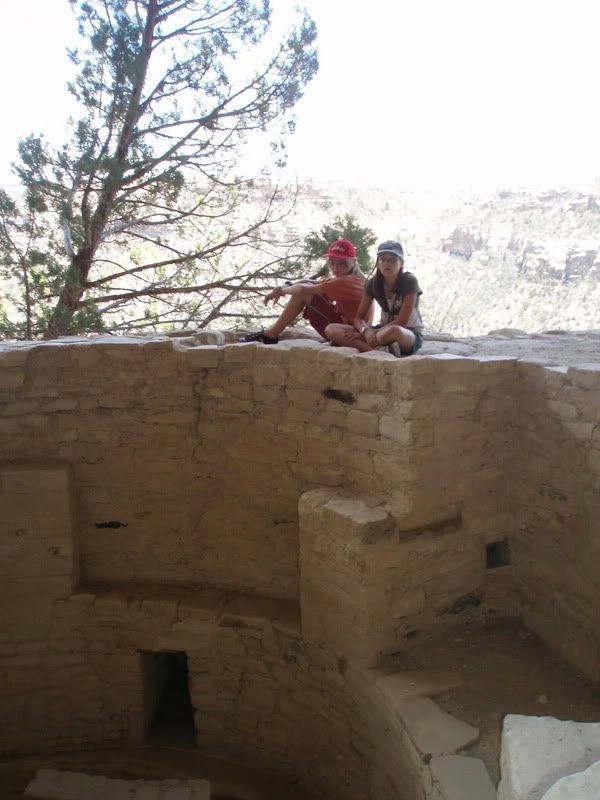
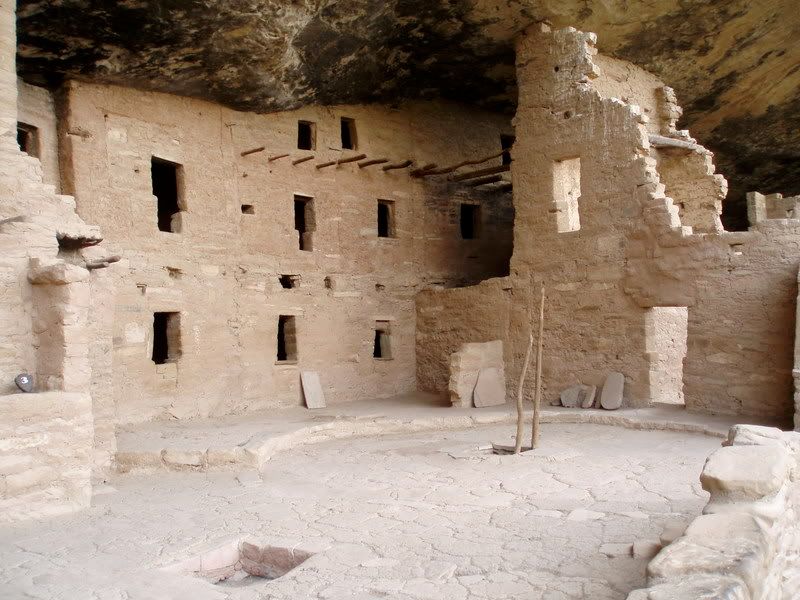
The round, sunken kiva structures were ceremonial, not typical family units.


Windows and doors were aligned to allow for the light of specific stars or planets.


Planted above the cliffs, dry farmed (non-irrigated) corn, beans and squash comprised 70% of the food sources with 15% gathered and the rest hunted.


Water from the mesa top took 20-30 years to filter through layers of canyon sandstone, eventually delivering up to 6 gallons/minute to alcove seep springs.


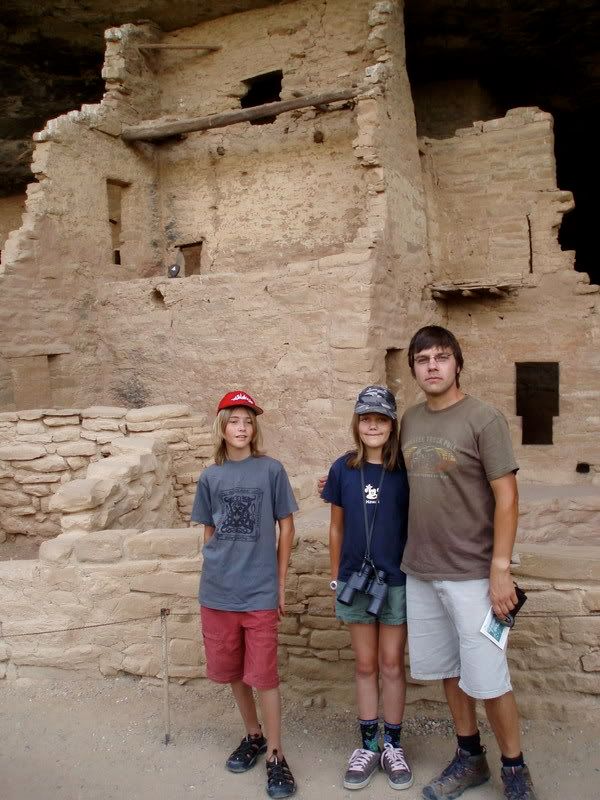
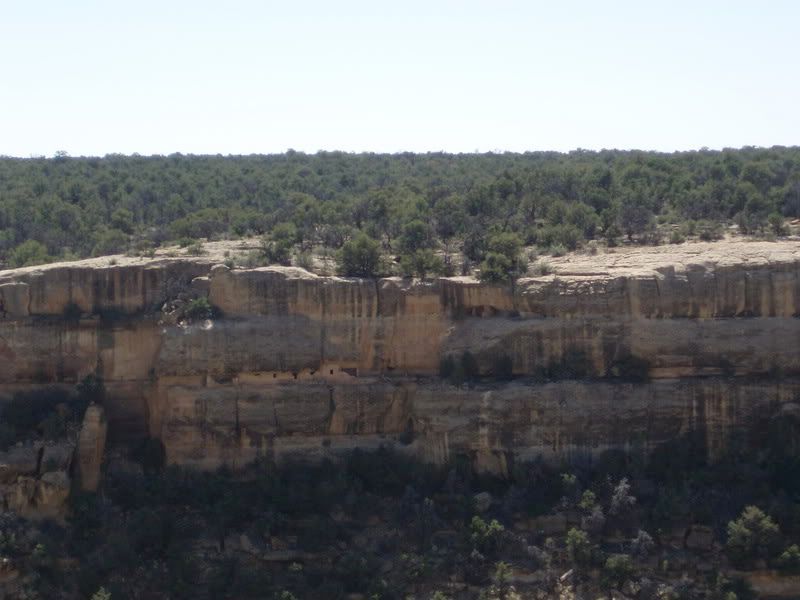
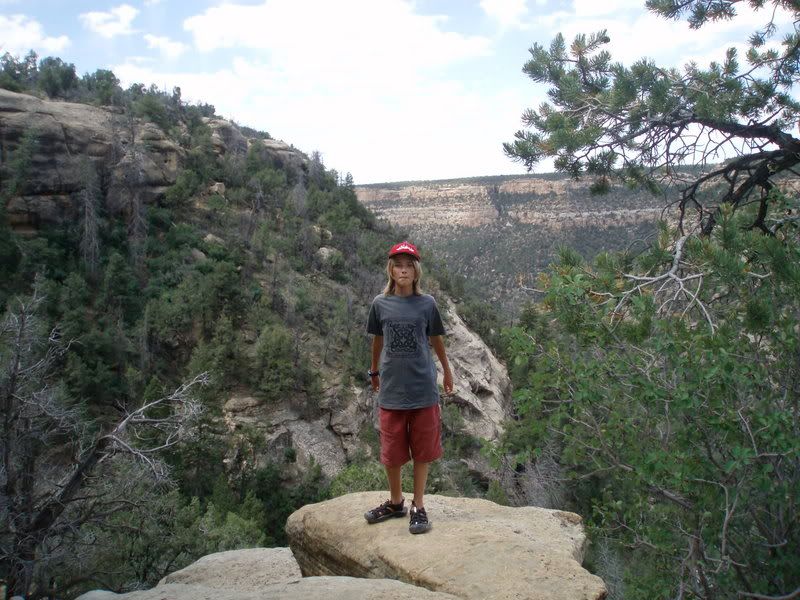
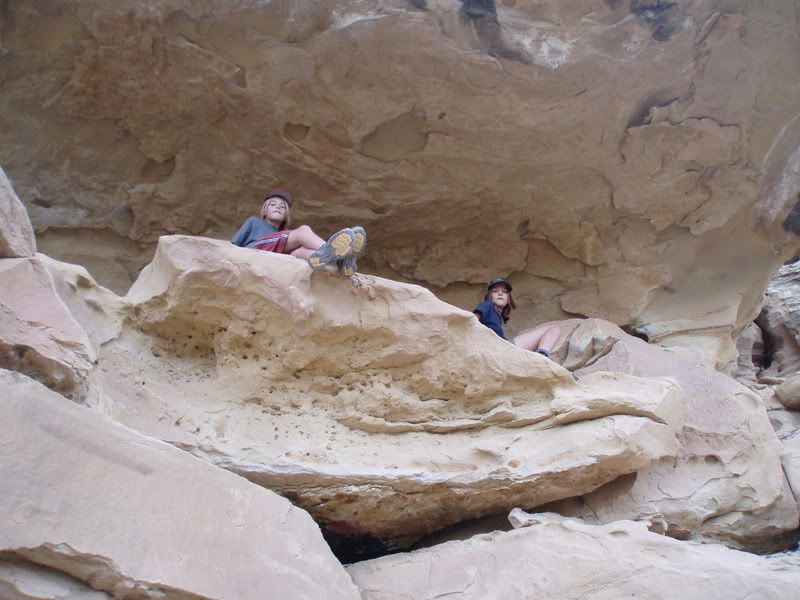
There are about 600 dwellings at Mesa Verde. We had access to three, saw more across the canyons and are awed by the presence of the rest. The sites have been protected by the federal government for 101 years. Not long enough to stop the Swedish archaeologist who exported dozens of artifacts or locals who used dynamite to remove walls blocking their access to pottery. There's speculation that ranchers may have pulled juniper beams from the roofs, for firewood.


For all the unknowns, Mesa Verde remains spectacular. Grounding.

Thursday, June 21, 2007

the 100 pictures

we took at Mesa Verde do not capture the ingenuity, architecture, power or history of the cliff dwellings or their people. They can't answer our questions of society, nature, spiritually and where they intersect. Still, I can't imagine our images from inside Cliff Palace and Balcony House or cross-canyon views of other alcove communities will gather much dust.

We're hoping for an early start tomorrow, a visit to Spruce Tree House, fingers in the steep springs, time to breathe and consider.

Wednesday, June 20, 2007

continental x4

Past the earthships, deep into the dry mesa lands, lies a different sort of "off the grid" community. The houses are built of old dryers, crates and partially buried cars. Scrap materials from who knows where. Inside information tells of a division "out there"- artists on one side and gun-toting, tattooed-face bikers on the other. If we go out, we might be invited to visit with someone. But we should be careful. And we probably shouldn't try to take the Volkswagon out, unless we have 4-wheel drive. We don't. That would require a Syncro and surely even more repairs than a standard Westy. So north we go, though Carson National Forest, a majestic back drop for our drive-time entertainment tale of witches, scholars and other worlds.

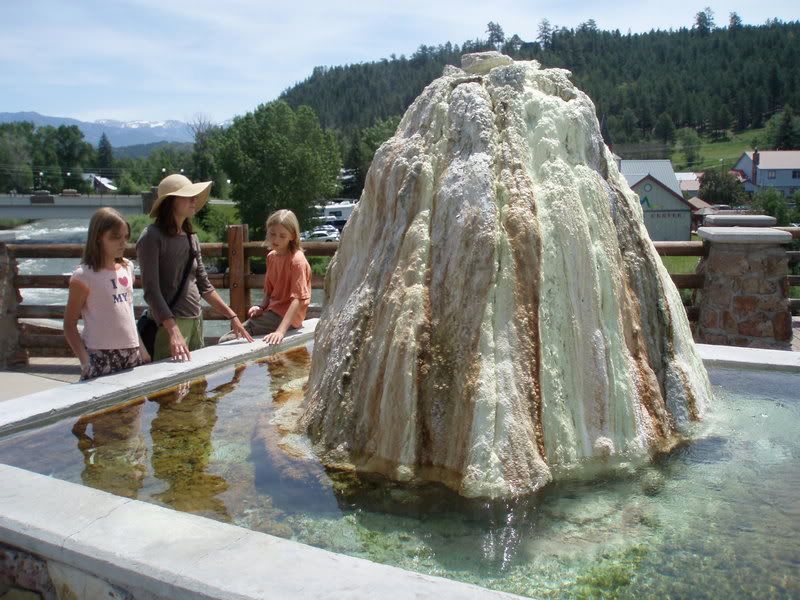
On our way towards Pagosa Springs, the town claiming the largest, deepest, hottest spring in world, we took Buttercup across the Continental Divide for a fourth time. Unfortunately the renowned spring is fenced against trespassers, preserving the source for an expanding resort community. If there are undeveloped pools up in the hills, the town isn't telling. Centuries ago, the Spanish battled the Natives for control of the spring's healing waters. We made space for a man with a 7-11 cup, collecting water from a tiny river-side spring. If I hadn't been watching the rafters while explaining to Aslin that we were not going to the theater across the street and watch Shrek, I might have asked if he planned to drink the sulfer-smelling water.


Past the archaeological site at Chimney Rocks we toured the privileged town of Durango. Set below the mountains along a river with a historic rail line running though, Durango's well aware of it's position in the western-town hierarchy. Historic buildings, successful mining, an art community, wind-powered brewery, the bed and breakfasts here might out number the residents. Just outside town, we camped at Lightner Creek where a 24 acre camp ground is for sale. Priced just under three million.


Three cheers for the 1,100 residents of Mancos! Residents of this mainly dirt road community sponsor an annual Renaissance festival and a fantastic bakery. Vegetarian, wheat-free and organic meals and treats are available at The Absolute Bakery and Cafe, across the street from the river.


Outside the charming river-rail town of Dolores, where the single grocery store stocks bulk grains and local produce, we've camped out with another great family. We really appreciate the wisdom of their ranger years and lessons they've shared of the Anasazi people, lands and ruins. We're currently praying that we have not passed on Ecoli or cryptosporidium or any other contaminated well water germs we may have picked up. (We were fine when we arrived, and three of us still are... fingers crossed.)

I'm feeling better at the moment. All most well enough to write the sad story of Cortez. Legend has it a well drilled in the center of town found no water. And a century ago town officials opted to pass on the rail option for fear of introducing "liberal elements" to the area. Eventually, The McPhee Dam and Reservoir Project, aimed at bringing more water to town, sparked a 7-year archeology project, uncovering 1600 sites in the immediate area. At the Anasazi Heritage Center, we visited two.

Sunday, May 27, 2007

"Best hike ever!"

Aslin's words. "You know I'm usually complaining by this far into a hike."


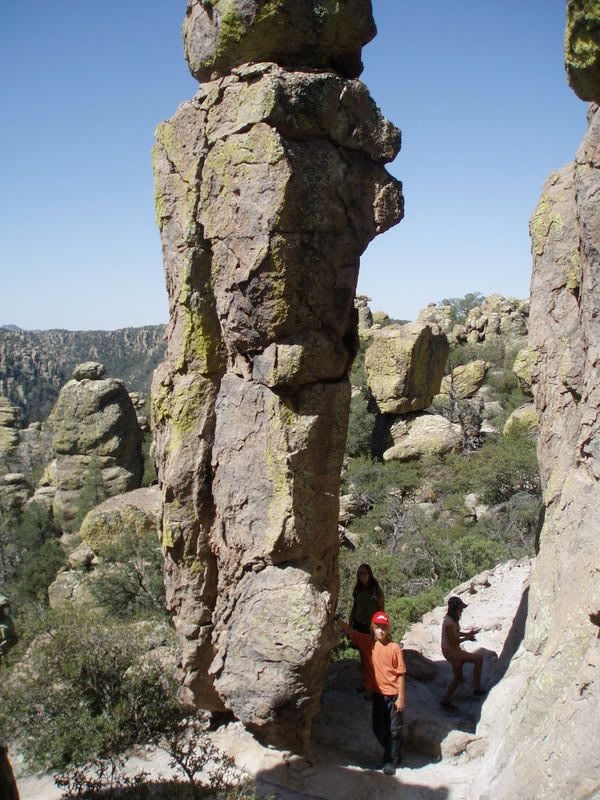
The rest of us confirm on both counts, Echo Canyon in the Chiricahua Mts is possibly the greatest day (morning) hike ever and she usually is complaining by the end of the second mile.


Before the hike details, you should know that we didn't make it out of Tucson with out one final visit with our mechanic, the moonlight voice of Liberty Radio. Marvel of the modern world, air conditioning, kept us cool the the Tucson city limit. I graciously thanked and declined the border patrol agent's (quicker to the scene than highway patrol) offer of water. Freedom fighter Mike was rock solid confident that the van wasn't actually overheating, that it was safe to drive into the shop. We were on the road again before my panic/despair mode even kicked in.

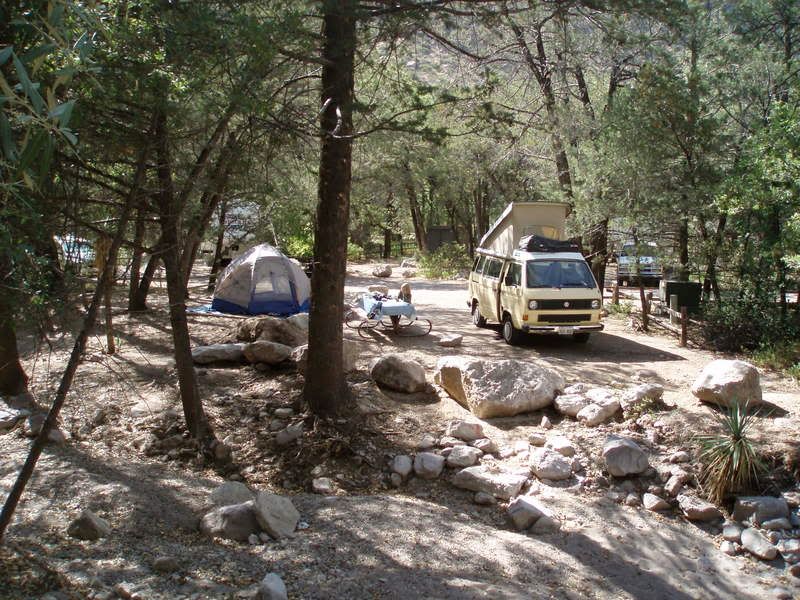
Eventually we made it to the campground- 24 sites in a wilderness area of 11,985 acres. Heading into Memorial Day Weekend, we failed our good intentions to arrive early, but still managed to find a beautiful (though excessively bug-filled) site.


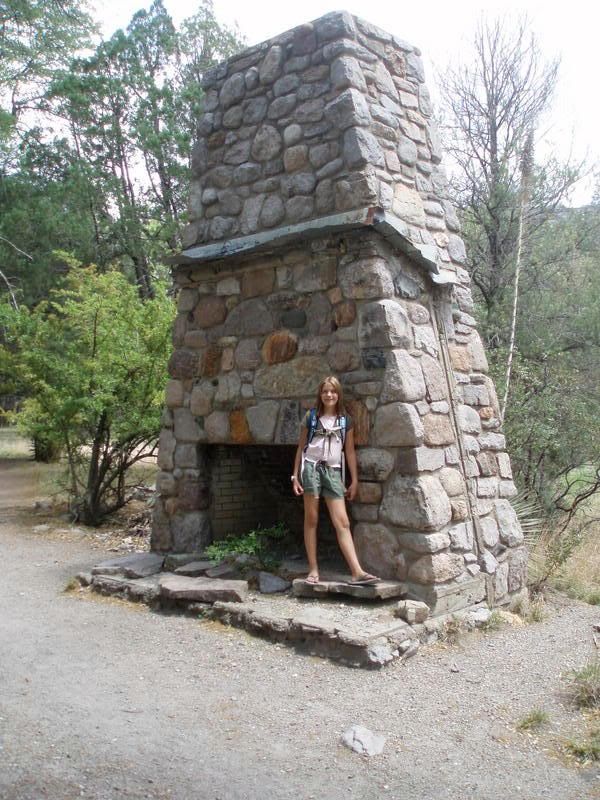
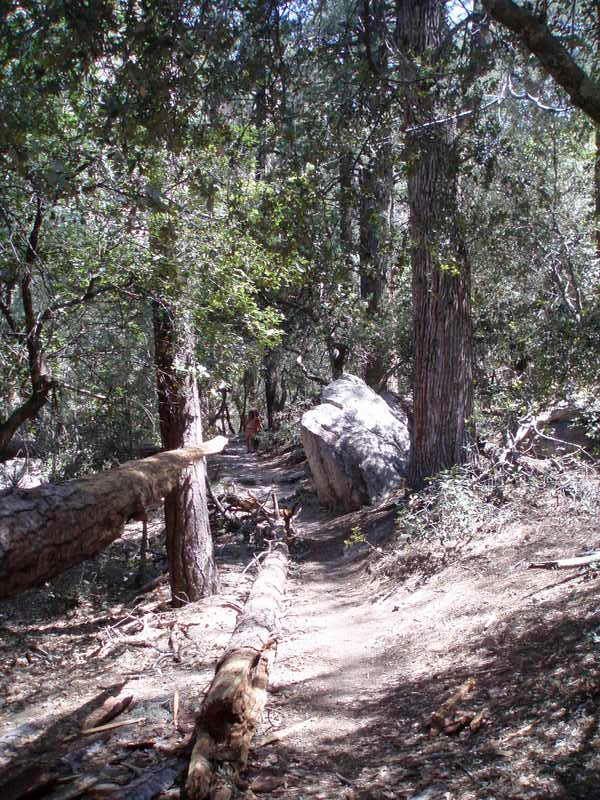
From our base at Bonita Creek, dry except for a few hours a year, we hiked through the alligator junipers along a trail built by Franklin D. Roosevelt's Tree Army. The Civilian Conservation Corp's long abandon bake ovens stand alone at the edge of a meadow. Grateful for a distraction from blood hungry mosquitoes, we searched the tree canopy for the power-tool buzzing cicada. A mile away, at Faraway Ranch, we heard stories of Swedish immigrants and Buffalo soldiers.

The first sold fraudulent stories of battles with the Apache to guests looking for authentic an cowboy experience. The later, after securing watering holes from Apache who never attacked, built a 10-foot monument to President Garfield, who as a senator, worked to secure equal pay for African-American soldiers.


Reacquainted with our tent, we managed our earliest pack ever. Packed, fed and on the road to the trial head at 8:51.


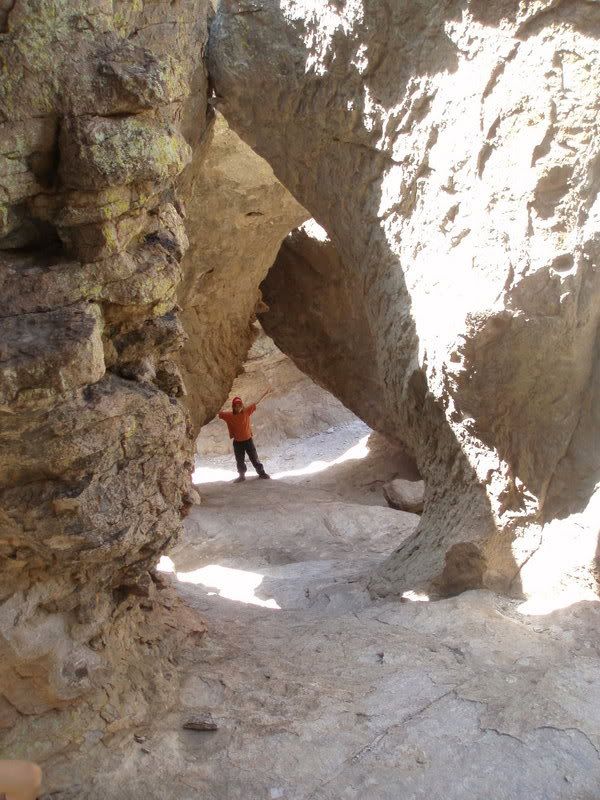
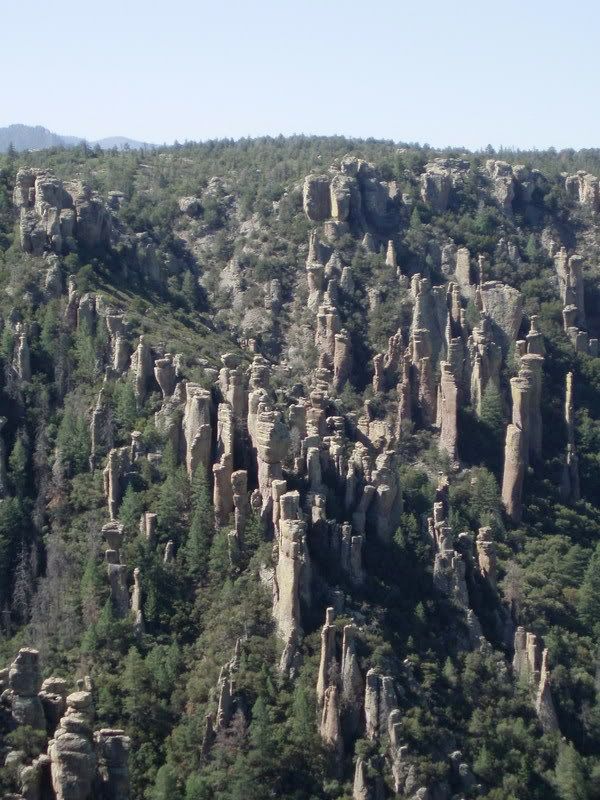
Past the Sea Captain and China boy, Echo Canyon brings us up close and personal to formations whose names have not been published.

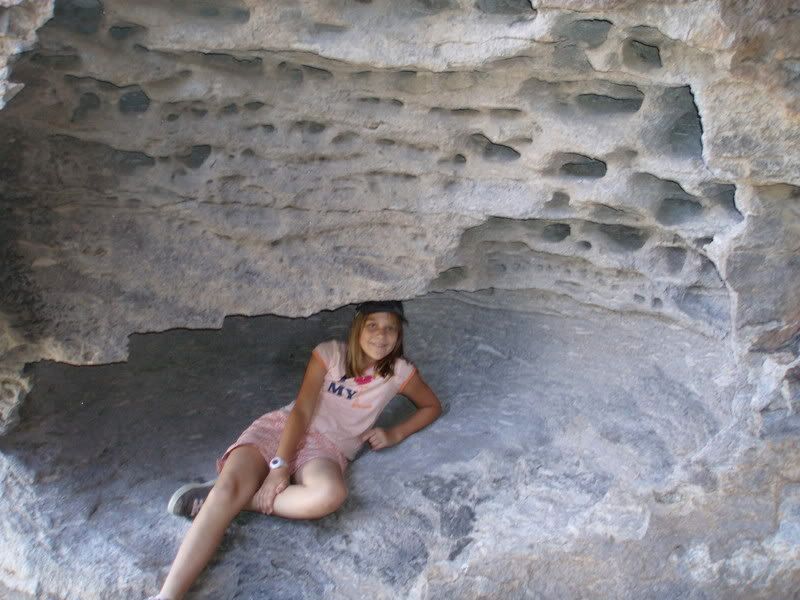
"It's like the rocks got too hot, they made bubbles and then, pop," Aslin.

Just past Ukiah's "pancakes,"

through the keyhole, the canyon floor comes into view.

Sure, it's called a "canyon" hike, but the view from Massai point doesn't predict the bird songs and the oak forcing it's way up from a boulder.

A friend suggested that the rock formations of the Chiricahua's rival those of the Grand Canyon. A don't have that point of comparison, but as Ukaih said, "amazingly beautious."

Thursday, May 17, 2007

mid-thought news-roundup

Hugo Chavez has been accused of "using [Venezuela's] state oil company to funnel billions of dollars to his social projects."
"His." I could be generous and suppose that Wall Street Journal reporter, Jose de Cordoba meant
Venezuelan social projects, rather than a health care system or farm established solely for use by the President. But this appears not to have been a verbal stumble for de Cordoba. In today's article, Farms are Latest Target in Venezuelan Upheaval, he goes on to state that land reform is possible because by 2005, Mr. Chavez "controlled the courts as well as congress..." The socialist reforms undertaken by the Chavez government make use of "rhetoric" that "smacks of the 1960's..." "Some Chavez initiatives recall disastrous past experiments with collective agriculture, such as... the Cuban revolution, which helped turn one of Latin America's richest lands into one of its poorest."
Venezuelan Coffee Farm


Millions of acres, 8.8, have been
reclaimed for agricultural use by the poor. Less than half the distributed land was owned by the state. Micro-lending programs have been corrupted. Food production appears to be down. Too bad de Cordoba "reports" with such bias and ignorance of history politics and economics that his writings on the challenges of the nation's current revolutionary undertakings can not be taken with any confidence.

While the front page gives gallery space to the dangerous faults of returning land and trusting food production to the masses under a socialist system, today's WSJ page D-1 gives us a rosy version of the same story, under our very own capitalist system. For Sale: Condo w/ Chicken Coop, by Sara Schaefer Munoz shines light on a growing trend among housing developers. "Forget the golf course community," she tells us. The demand wasn't necessarily quick access to the gentleman's game. It was about living in a
green community, where outdoor space and views are protected. Condos and new homes are being built around existing farms, or in conjunction with new agricultural developments.

So, a developer in southwest Florida constructs a 17,000 acre housing community surrounded by "73,000 acres including a nature preservation and a cattle farm" and the WSJ states that "for city folks, moving to a farm can require some adjustment." When the democratically elected leader of Venezuela offers a free 2-year farm voc-tech program for urban poor, the WSJ considers it a "hodgepodge of Marxism, 'ancestral' Venezuelan farming methods and Cuban fertilizing techniques."

Are we clear now? Spend between $200,000 and million on a home with access (hands on or off) to an organic farm in Florida, and you're part of a pioneering, eco-friendly revolution. Start a farming cooperative under the leadership of a Latin American president working to end decades of corporate pillage and massive absentee landownership, and you're destined for (continued) poverty if not starvation.

(The Wall St. Journal arrives at the house every morning courtesy of a plethora of airline miles not eligible for use on actual flights.)


We're planning to head out on Monday, so I'm working overtime to meet my news junkie need. Other stories making their way through my mind-

» The F-16 flare drop over south Jersey. Not only is the story of note, but the comments at this site have been fantastic.

» James Comey's testimony before the Senate Judiciary Committee is notable as much for its content as for his candor and humility. Never, in a million years, would I have trusted John Ashcroft as the last line of defense for our constitution. Suppose history shows him as our last principled attorney general.

» US investors are finally just saying no to profiteering in war-torn Sudan. I'm overly optimistic in wishing that some of that pulled capitol would be directed, even "funneled" into social programs in the region.

» Christopher Hitchens is unapologetic in his lack of remorse for the recently deceased Jerry Falwell. This on the heels of Richard Dawkins' "...you're an atheist about all those Gods, some of us just take it one God further..." debate with Steven Colbert.

Sunday, May 13, 2007

emmer rye

The mystical grain I couldn't remember. A paper published in 1972, on the comparative evolution of cereal and a passover quiz are among the few google hits.

True or False- According to Mishnah, matzoh could be made from wheat, barley, emmer, rye and oats.

You may be interested to note that the quiz distinguishes between emmer and rye, opening a natural connection to the evolution article.


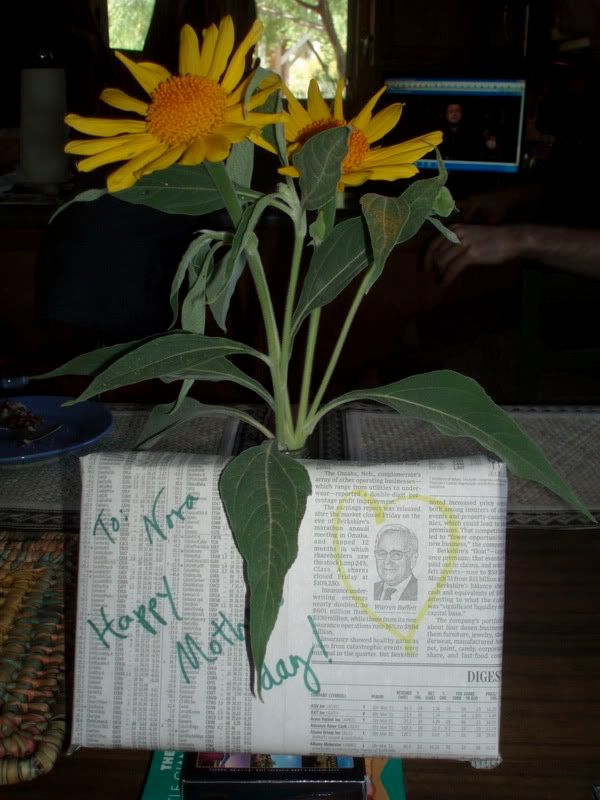
So. The scone, I'm sorry to report, fell far short of the scone of my memory. The tomatoes, greens, B & D's early trip to another bakery, and my brief encounter with the intriguing scone-selling character more than made up for it. A gift, complete with Warren Buffett tribute followed by a walk to the apricot tree, and I've over come the let down entirely.


Peace, love and promise to all you mamas, this and every day.